If you’re a graduate student or a parent planning to help pay for college, big updates to the Federal PLUS loan program are coming in 2026—and it’s a good idea to start preparing now. Here’s a quick breakdown of what’s changing and how you can stay one step ahead.
Grad PLUS: What’s the Latest
What’s Changing?
Starting July 1, 2026, Grad PLUS Loans will no longer be available to new borrowers. That means if you’re planning to start graduate or professional school after that date, you’ll need to explore other ways to pay for your education.
What if I Already Have a Grad PLUS Loan?
Good news: if you already have a Grad PLUS Loan—or take one out before the cutoff—you’re still covered. Borrowers will have a three-year grace period after July 1, 2026, to continue borrowing under the current rules.
What if I am thinking about going to Graduate School?
If you’re thinking about grad school in the next few years, it’s time to think through your financial strategy. While Federal Direct Unsubsidized Loans are still on the table, they may not be enough to cover everything from tuition to textbooks to housing.
Federal Grad PLUS loan Changes Coming: Before & After July 2026
| Category | Before July 1, 2026 | After July 1, 2026 (for new borrowers) |
|---|---|---|
| Annual Limit (Direct Unsubsidized) |
$20,500/year (Non-Professional & Professional Graduate Degrees) | Graduate (non-professional): $20,500/year Professional (e.g. law, medicine): $50,000/year |
| Lifetime/Aggregate Limit (Direct Unsubsidized) |
$138,500 total (includes undergraduate borrowing) | Graduate (non-professional): $100,000 total Professional (e.g. law, medicine): $200,000 total |
| Covering costs above unsubsidized caps | Grad Plus available to cover remaining cost of attendance | No federal options - Must use alternate funding. |
The Differences between Professional and Non-Professional Degree Programs
There are different borrowing limits for graduate students enrolled in professional degree programs versus non-professional degree programs.
Professional Degree Graduate Programs
Under federal student aid rules, professional degree programs generally prepare students for direct entry into a licensed or regulated profession. The Department of Education is working to finalize the programs that qualify as “professional” degrees. But an early approved draft of the rules indicates the following degrees qualify as professional:
- Chiropractic (D.C. or D.C.M.)
- Dentistry (D.D.S. or D.M.D.)
- Law (J.D. or L.L.B.)
- Medicine (M.D.)
- Optometry (O.D.)
- Osteopathic Medicine (D.O.)
- Pharmacy (Pharm.D.)
- Podiatry (D.P.M, D.P., or Pod.D.)
- Theology (M.Div. or M.H.L.)
- Veterinary Medicine (D.V.M.)
Final regulations are still forthcoming and are expected to be finalized in early 2026.
After July 1, 2026, federal Direct Unsubsidized loans for professional graduate degrees will have an annual limit of $50,000 per year and a lifetime limit of $200,000 in total.
Non-Professional Degree Graduate Programs
Non-professional programs typically include all other types of graduate programs, such as:
- Master’s degrees (MA, MS, MBA, MEd, etc.)
- Research-oriented doctoral degrees (i.e. EdD)
- Other graduate programs that do not directly lead to professional licensure
If you’re unsure whether your program qualifies as professional or non-professional, your school’s financial aid office can confirm how it is classified for federal loans.
After July 1, 2026, federal Direct Unsubsidized loans for non-professional graduate degrees will have an annual limit of $20,500 per year and a lifetime limit of $100,000 in total.
Private Loans Can Cover Graduate School Costs
Private student loans can help cover the full cost of attendance when federal aid and savings don’t go far enough. Look for lenders – like College Ave – that offer flexible repayment options and a personalized experience that’s anything but one-size-fits-all.
Parent PLUS: What’s the latest
Big updates are coming to the Federal Parent PLUS Loan program starting July 1, 2026, too. Here’s what to know:
- Right now, parents can borrow up to the full cost of attendance for each child in college.
- Beginning with the 2026-2027 academic year, this will change. Parents will be capped at $20,000 per year with a lifetime borrowing limit of $65,000, per student.
- If your student enrolls before July 1, 2026, you can still access the current unlimited borrowing—for up to three more academic years or until they finish their program, whichever comes first.
Federal Parent PLUS Loan Changes Coming: Before & After July 2026
| Before July 1, 2026 | After July 1, 2026 |
|---|---|
| Borrow the cost of attendance (minus any other financial assistance your child) | Borrow up to $20,000 per student per year, with a max lifetime limit of $65,000 |
Exploring Alternatives to Federal PLUS Loans? We’ve Got You.
With big changes coming to the Federal PLUS Loan program, it is a smart move to start looking at your options. Private student loans can help fill the gap—and that’s where College Ave comes in.
- For graduate students, we offer flexible loan options tailored to specific programs—whether you’re pursuing a degree in law, medicine, dental school, or another advanced field.
- For parents, our Parent Loan is designed specifically to help cover college costs for your child’s education. Want more flexibility? You can also co-sign a private student loan with your student, which may even help secure a lower interest rate.
See How We Compare to the Federal PLUS Loan Program
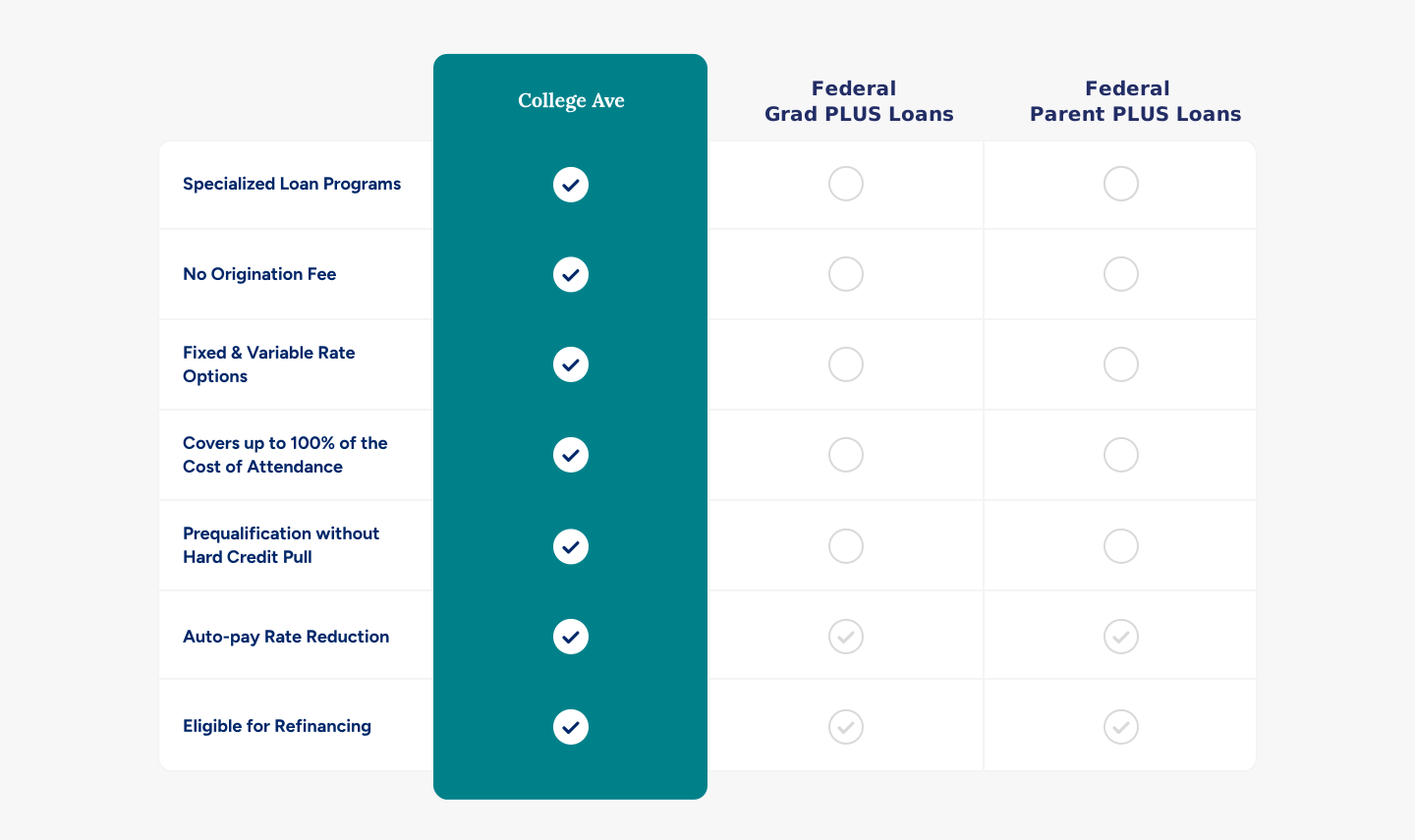
With expert insights and flexible loan options, we understand new policies may affect your funding strategy and repayment plans. Whether you’re a graduate student or a parent, we’re here to support your success every step of the way.
Prequalify in Minutes
No need to wait — prequalify for a private Graduate student loan or Parent loan in minutes to get a better understanding of your options.
FAQS
When do Federal PLUS loans (Grad & Parent) end?
The program begins phasing out on July 1st, 2026. Borrowers who already have Grad PLUS or Parent PLUS loans before that date can continue borrowing for up to three more years or until they complete their program, whichever comes first.
Am I still eligible for a PLUS loan?
If you take a Grad PLUS or Parent PLUS loan before July 1st, 2026, you will still be eligible to receive the current loan limits and can continue borrowing for up to three more years or until you complete your program, whichever comes first.
What other Federal Student Loan options do I have once these changes take effect?
Graduate students can still borrow up to $100,000 in total direct unsubsidized loans ($20,500 a year) and professional students (Medical, Law, etc.) up to $200,000 total ($50,000 a year).
Parents can still borrow under the Parent PLUS loan but can only borrow up to $20,000 per student and per year, with a maximum lifetime limit of $65,000.
Once those caps are hit, an alternative way to fund will be needed, like scholarships, grants or private student loans.
Who is eligible for a graduate student loan with College Ave?
Graduate students must be a U.S. citizen or permanent resident enrolled at an eligible institution. Students must meet the satisfactory academic progress guidelines of their school. International graduate students with a U.S. social security number and a qualified cosigner are also eligible to apply for graduate student loans.
A cosigner may be needed for those who do not meet financial, credit or other requirements for taking out a private loan. Cosigners must be U.S. Citizens or Permanent Residents.
Who is eligible for a Private Parent Loan?
Eligibility for private parent loans may vary from lender to lender. College Ave’s parent student loan is available to parents, grandparents, guardians, or other family members (like aunts or uncles) who want to help cover the cost of the child’s education. Approval for the loan will depend on the applicant’s parent or guardian’s credit history and income review.