
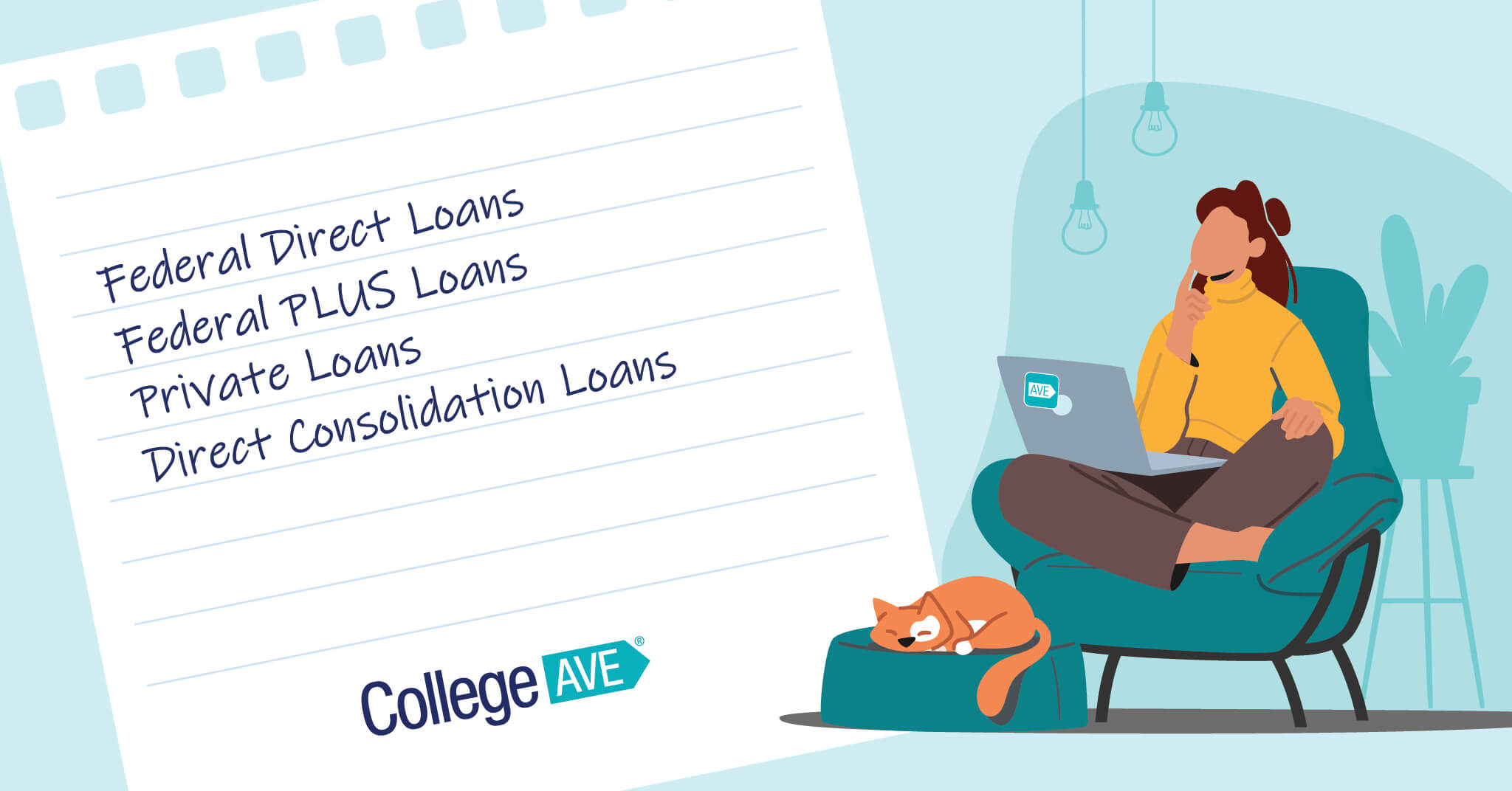
Have you been accepted to the college or university of your dreams, been awarded all the scholarships and grants you’re eligible for, and still find yourself in need of more tuition money?
Millions of students find themselves in the same position as the school year approaches, turning to loans to help fund their education.
But you shouldn’t just jump head first into any student loan you see. There are a wide range of student loan types out there and understanding the terms of each option is key to finding the best one for you.
Federal vs Private Loans: Understanding the Difference
When it comes to student loans, there are primarily two categories of funding: federal loans and private loans.
You may be more familiar with federal loans, as they’re often the first stop for many students and families. But depending on your financial situation, a private student loan could be a smart way to fill in the gaps.
Before we dive too deep into all the student loans out there, you need to understand a few distinct differences between federal and student loans:
| Federal Student Loans | Private Student Loans | |
|---|---|---|
| Based on Need | Yes (some loans) | No |
| Credit Check | Not usually required | Required |
| Interest Rates | Fixed, set by government | Fixed or variable, based on credit |
| Forgiveness Options | Available | Not available |
| Cosigner Required | No | Often yes |
| Repayment Flexibility | High | Varies by lender |
- Loan source: Private loans come from banks and financial institutions, while federal loans come from the government.
- Application: You complete the FAFSA to gain access to federal student loans, while you apply through your lender for a private loan.
- Credit score: Most federal student loans don’t require a credit check, but a private loan typically does.
- Cosigner: Because federal loans don’t usually consider credit, they don’t require a cosigner, but having one with strong credit could help you get a private loan and may help you qualify for a better interest rate
- Need-based aid: You could qualify for an advantageous subsidized federal loan based on your expected family contribution, which private loans won’t take into consideration. Subsidized loans do not accrue interest while you are in school at least half-time or during deferment.
- Borrowing limits: The limits vary depending on the loan, but the FAFSA will dictate federal loan amounts. Private loans may be determined by the cost of attendance.
- Interest rates: Federal loans come with fixed interest rates, whereas private loans typically offer both fixed or variable rates.
- Repayment: You can change your repayment plan with a federal loan, while terms are typically set in stone with traditional private student loans.
With those key differences established, let’s take a look at all the student loans at your disposal.
Types of Student Loans
Federal Direct Loans
Direct Loans (previously known as Stafford Loans), are among the most common types of federal student loans, available to both undergraduate and graduate students.
Direct Loans require you to be enrolled at least half-time in a degree-seeking program. These loans come with all the benefits of federal funding, like the income-driven repayment plan, which determines your monthly payment based on income, and low fixed interest rates, with terms ranging from 10-25 years. They do, however, come with an origination fee, which is a little over 1% of the total loan amount.
Direct Loans come in two forms, broken down here:
- Direct Subsidized Loans: The interest on these loans is covered while the student is enrolled at least half-time in a degree-seeking program.
- Direct Unsubsidized Loans: These unsubsidized loans accrue interest even while you’re in school.
Direct Loans offer flexible repayment options and fixed interest rates and good options for any student who may need to borrow.
Federal PLUS Loans
The main difference between a PLUS Loan and a Direct Loan is that this one calls for a credit check. The other distinct difference is the higher origination fee, along with a higher interest rate.
To qualify for a PLUS Loan, you’ll need to pass a basic credit check or have an endorser. There are two types of PLUS Loans, highlighted below:
Grad PLUS Loans: Federal loans designed for professional and graduate students who have some credit history to stand on. They give you a chance to access funds beyond your financial aid package and Federal Direct Loans to cover the cost of tuition with deferment until after graduation.
Important Update: Starting July 1, 2026, new federal rules will end Grad PLUS Loans for new borrowers. Graduate and professional students will instead rely on increased limits for Federal Direct Unsubsidized Loans, as part of the financial aid reforms passed in 2025. If you’re currently considering graduate school, keep this deadline in mind as it may affect your borrowing strategy.
Parent PLUS Loans: Created to help parents (adoptive, biological, and stepparents) pay for their dependent children’s college, these loans are paid while the student is in school, with the option to apply for deferment.
Important Update: Starting July 1, 2026, new federal rules will change Parent PLUS Loans for new borrowers. New caps will be enacted that will limit the amount parents can borrow.
Bottom Line: PLUS Loans come with the repayment benefits that make federal loans appealing, so they could be an option if you still need funds beyond the aid you’ve been awarded. But generally, Direct Loans should be your first choice with their low rates and origination fees, especially with upcoming changes to federal loans.
Private Loans
If you find yourself in need of more financial assistance to pay for college after utilizing federal loans, you have plenty of private loan options to consider.
Private student loans are comparable to other types of loans. Your interest rates are based on your credit rather than need and they aren’t subsidized, which means you’ll be accruing interest on them while you’re in school.
You’ll also find fewer opportunities to defer your payments after graduation and change the terms of your repayment plan.
Private student loans sometimes come with higher interest rates than federal loans (again, based on your credit history), and those rates can be variable.
Some private loans come with lower fixed rates than PLUS Loans, though, making them especially appealing alternatives if you have good credit.
A lender like College Ave can match you with loans tailored to your budget and needs in minutes, bringing you the best interest rates and quick prequalification. You’ll also get top-notch advice on planning out your repayment.
Direct Consolidation Loans
You may have heard about Direct Consolidation Loans, these loans consolidate existing federal student loans and are not used to initially fund your education. They can help you streamline your loan repayment, and can offer some rewarding benefits.
Thanks to the Department of Education’s Direct Consolidation Loan Program, you can combine several loans into one, which means you get one monthly statement and make payments to a single loan servicer.
There could also be added benefits, varying from servicer to servicer, like the ability to lock in fixed interest rates, change your repayment terms, and decrease your monthly payments.
There are a few downsides, though that you should be aware of:
- More interest: You may lower your monthly payments by extending the length of your loan but doing so means you’ll pay more on interest in the long run.
- Higher interest: Read the fine print, as sometimes the consolidated interest rate can be a bit higher than the original loans’ interest rates.
- Losing progress: If you’ve been working towards loan forgiveness, the credit you’ve built towards that goal could be lost when you consolidate.
Consolidation can be a solid strategy if your goals are lowering your monthly payments and simplifying the repayment process; just be sure you’re considering the negative consequences, too.
Other Student Loans You May Have Heard of Before, But Are No Longer Offered
There are other student loan types that have been discontinued or changed. Existing borrowers may still be repaying these loans, so don’t be surprised if you come across them in your research. Keep in mind you won’t be able to apply for these, but it is helpful to know what they were.
- Perkins Loans: These federal loans ended in 2017
- FEEL Loans: These loans ended in 2010
- Stafford Loans: These loans still exist, they are just called Direct Loans now.
Bottom Line
Don’t let the fact that your financial aid isn’t equal to your cost of attendance slow you down. Any of the loan options listed here can help make your dreams of attending college a reality.
And luckily, applying is as simple as completing the FAFSA or using College Ave’s free prequalification tool.
What are you waiting for? Start your college journey with a private student loan from CollegeAve. Apply today.