As a student, it’s important to manage your money. Paying close attention to where your money is going will help you identify places to cut back or make smarter choices.
6 Money Management Tips
Managing money can seem overwhelming. Especially when you’re in college, and the thought of checking in on your funds might make you cringe. College is often the first time students are fully in charge of their own money. From paying for textbooks and food to managing rent and paychecks, there’s a lot to keep track of. Without a clear plan, it’s easy to overspend or fall short. However, budgeting for college students doesn’t have to be painful. Effective money-management isn’t difficult, and it can cut down on stress around your finances. Learning to budget early helps you make the most of your income and financial aid, while also building habits will will stick with you long after graduation.
This article will cover some of the best budgeting tips for college students.
1. Create a Savings Goal and Track Your Progress.
Saving money, in general, might not sound exciting, but what if you had a goal in mind to motivate you? Let’s say you want to buy a new laptop. Figure out how much money you want to put aside each month until you’re able to make this purchase, and make sure to track your progress along the way. Forming healthy savings habits is key in budgeting for college students. This will help you stay away from wasteful spending, and gives you a good reason to keep track of your funds.
Try breaking your goal into smaller monthly targets, like saving $100 each month for six months. Celebrate small milestones to stay motivated. You can use a budgeting app or a simple progress chart to keep track of how close you are to reaching your goal. Seeing your savings grow over time can make the process more rewarding and help you stay focused.
College Ave created this student budget worksheet as a resource to create and track your monthly budget. Don’t forget, your expenses and spending will fluctuate from month to month, so it’s important to make regular adjustments. Even saving as little as $25 a month can quickly add up. Over a year, that means you can add $300 to your savings.
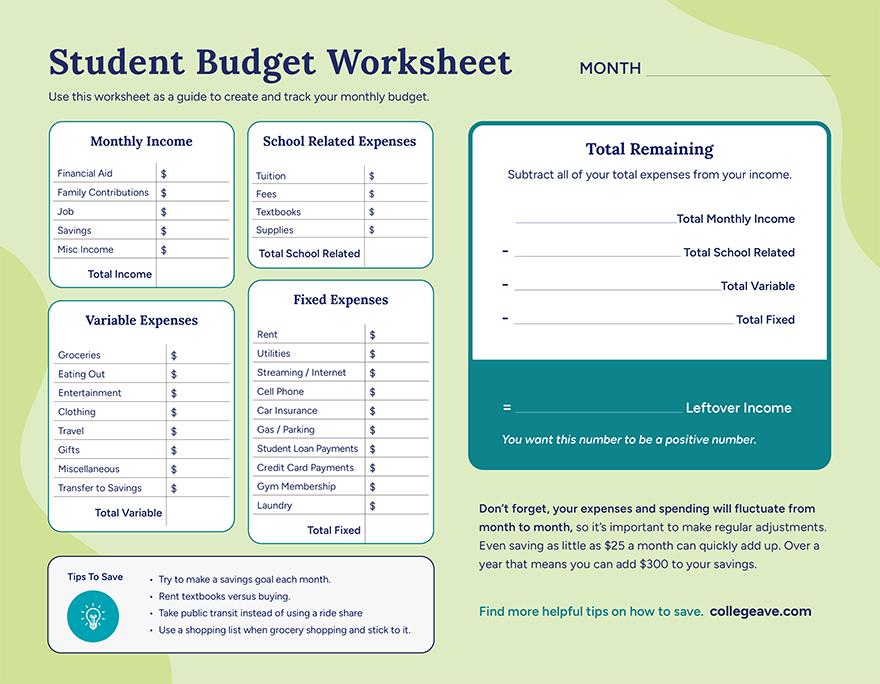
To download the full worksheet, click here.
2. Wait 48 Hours Before Making a Purchase.
Do you ever go into a store with one thing on your shopping list, only to leave with a full cart? Those impulse purchases can really get the best of you. Next time you eye something new that you want, wait 48 hours before you actually make the purchase. If the impulse passes, so should you.
Using that time to think through whether the item fits your budget and whether it’s something you truly need can help you avoid unnecessary spending. You might realize you already have something similar, or that the excitement fades after a day or two. This pause encourages more intentional choices and helps you avoid buyer’s remorse.
3. Check for Student Discounts and Promo Codes Before Swiping Your Card.
You waited 48 hours instead of impulse buying, but this purchase is still at the front of your mind. Is it time to swipe your card? Not yet. First, check and see if the retailer offers any student discounts. Many businesses offer lower prices if you’re able to present a valid student ID. You should also check out if there are any valid coupons or promo codes you can redeem. Sites like RetailMeNot and eBates, or Chrome extensions like Honey, can help you find the best deals.
Taking a minute to look for these offers can lead to savings that really add up over time.
4. Look at Your Banking Statements and See Where You’re Wasting Money.
Food? Coffee? Late fees? New clothes? One of the easiest ways to manage your money is to first recognize where you’re doing most of your spending. Then, you can consciously make an effort to cut down on these expenses.
Start by reviewing your last bank or credit card statements and highlighting purchases that weren’t essential. You might be surprised how often small, frequent purchases add up. Once you spot the patterns, try setting simple goals like cutting your coffee runs in half or sticking to a weekly food budget to help you stay on track.
5. Start an Emergency Fund.
Let’s say you finally purchased that laptop you created a savings goal for. The very next day, your car breaks down, and it’s going to cost you a big sum of money in repairs. Ouch! Unexpected expenses like this happen, but it’ll lessen the blow a bit if you’ve prepared for these situations ahead of time. Start putting aside a little bit of money each month that you’ll only touch when situations like these arise. You’ll rest easy knowing you always have this fund as a safety net.
Building an emergency fund doesn’t require saving a large amount all at once. Setting aside ten or twenty dollars each week can add up over time and provides a financial cushion for unexpected expenses. Aim to save enough to cover at least one or two months of essential costs. Keeping this money in a separate savings account helps prevent accidental spending and makes it easier to watch your fund grow steadily.
6. Factoring Financial Aid Into Your Budget
Financial aid isn’t just for tuition. It might help cover housing, food, or books. Start by figuring out your net aid (what’s left after your school deducts tuition and fees), then allocate what remains across your living expenses. Since financial aid is typically disbursed once per term, plan to stretch it over several months If you’re using student loans, spend them judiciously because it’s money you’ll eventually repay. Budgeting with financial aid included helps prevent overspending and sets you up for long-term success.
Bringing It All Together
Managing your money as a college student may feel challenging at first, but with the right habits and a clear plan, it becomes much more manageable. By setting savings goals, practicing mindful spending, taking advantage of discounts, tracking your expenses, building an emergency fund, and factoring financial aid into your budget, you’re setting yourself up for financial success both now and in the future. Remember, every small step you take toward budgeting wisely brings you closer to greater control over your finances and peace of mind throughout your college journey and beyond.
Considering private student loans to help cover your college costs, Apply today with College Ave and get the support you need to fund your education on your terms.